
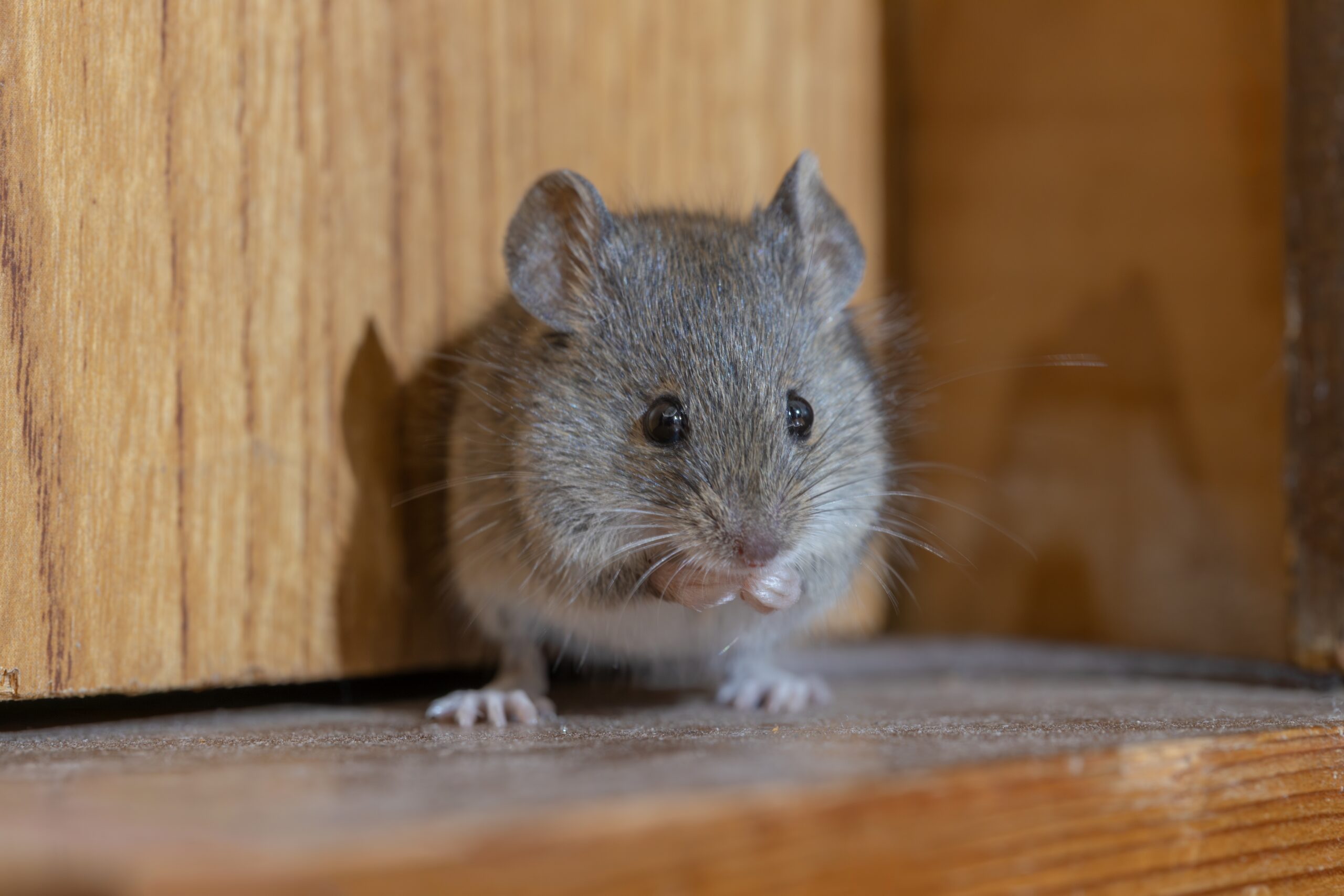
Most mice don’t get much of a second look. They’re small, gray, quick, and gone before you can grab the broom. Up here in the pines, though, there’s one mouse worth getting to know a little better. It has big dark eyes, oversized ears, a white belly, and a tail that looks like it was dipped in paint on one side.
It’s the deer mouse, and every fall, as the nights in Payson and Pine drop toward freezing, it starts looking for a warmer place to spend the winter.
Deer mice are a normal part of life in Rim Country. They’re also the reason we treat mouse droppings in a cabin or shed a little differently than you might expect. At Friendly Pest Control, we’d rather you know what you’re dealing with before you start cleaning, so here’s the full picture, minus the panic.
How Can You Tell a Deer Mouse From a House Mouse?

It comes down to the color pattern. A house mouse is the same dull gray-brown from nose to tail, top and bottom. A deer mouse is two-toned: brown or tan on top with a crisp white belly and white feet. The giveaway is the tail, which is dark on top and white underneath, with a clean line between the two.
Deer mice also have noticeably larger eyes and ears for their size, which gives them a slightly startled, cartoonish look. They’re common in woodland and brushy country, which describes most of Rim Country pretty well. If you’re not sure which one you’ve got, a photo of the tail usually settles it.
Why Do They Move In When It Gets Cold?
Deer mice spend the warm months outdoors, nesting in woodpiles, brush, stumps, and rock crevices. When temperatures drop, they look for dry shelter out of the wind. A cabin closed up for the season, a storage shed, a garage, an RV, or the crawl space under a house all fit the bill, especially if there’s a bag of birdseed or pet food nearby.
Once inside, they build nests out of whatever soft material they can find: insulation, paper, fabric, and stuffing pulled from cushions and mattresses. They’re good climbers, too, so it’s common to find signs of them in cupboards, drawers, and attics, not only along the floor.
What Does Hantavirus Have to Do With Deer Mice?
According to the University of Arizona Cooperative Extension, the most common hantavirus strain in Arizona is the Sin Nombre virus, and it’s spread by deer mice. People usually get it by breathing in dust from dried mouse droppings, urine, or nesting material, which is why the risk shows up during cleaning rather than from simply seeing a mouse.
Hantavirus is rare, and it doesn’t spread from person to person. It can also be life-threatening, which is why health officials pay close attention to it. Mohave County Public Health specifically calls out people opening seasonal cabins, preparing RVs, and cleaning out garages or outbuildings as times to take extra precautions before disturbing dust or debris. If you split time between the Valley and the high country, that’s a familiar to-do list.
How Should You Clean Up Mouse Droppings Safely?
The most important rule is this: don’t sweep or vacuum droppings or nests. Both kick dust into the air, which is exactly what you want to avoid. Health departments across the West give the same basic instructions, and this public health cleanup guide lays them out clearly:
- Open the doors and windows to air the space out before you start, and step outside while it ventilates.
- Put on rubber or plastic gloves before you touch anything.
- Spray the droppings, nests, and any dead mice with a mix of 1 part household bleach to 9 parts water, or a household disinfectant, until they’re thoroughly wet.
- Let the solution soak for about 5 minutes, then wipe everything up with paper towels and bag it for the trash.
- Mop or wipe the surrounding area with the same solution, then wash your gloved hands before taking the gloves off, and wash your hands again after.
A big nest in an attic, heavy droppings across a cabin floor, or a crawl space you’d have to wriggle into are all good reasons to hand the job to someone with the right gear. If you feel sick in the weeks after a heavy rodent cleanup, see a doctor and mention the rodent exposure, since that detail can help them think of hantavirus early.
How Does Friendly Pest Control Keep Deer Mice Out Without Poison?
We don’t use rodenticides, period. Poison can leave a mouse dying inside a wall; it can work its way up to the owls, hawks, and foxes that eat mice, and it does nothing about the gap that let the mouse in. Our rodent exclusion service goes after the reasons mice are getting in, and it combines a few things:
- We trap the mice that are already inside, so the current residents move out.
- We use non-toxic scent repellents to make the space less appealing to the next ones that come looking.
- We find and seal the openings they’re using, since a deer mouse can squeeze through a gap about the width of a pencil.
What Can You Expect When a Friendly Technician Comes Out?
A visit starts with a walk-around, inside and out. We’re looking for droppings, nesting material, gnaw marks, and the travel routes mice use along walls and pipes. The most important part of that walk-around is the entry points: gaps around plumbing and wiring, unscreened vents, worn door sweeps, and openings where the siding meets the foundation.
From there, we explain what we found and what we recommend, in plain English, before we do the work. We usually trap first, then seal once the activity drops off. Seasonal cabins get special attention, since they sit empty for weeks and mice have plenty of quiet time to settle in. If you’re not home during the service, your technician can send you a video of the work.
We’ll also be upfront about what exclusion can and can’t do. Sealing a home makes it much harder for mice to get in, but in a place surrounded by forest, new mice will keep testing the edges. Regular checkups keep you a step ahead.
Stay Ahead of the Problem with Friendly Pest Control
There’s an old saying that fits deer mice about as well as anything: forewarned is forearmed. Knowing which mouse you’re looking at and how to clean up after it puts you in good shape before the first snow. Keeping them out is the next step, and that’s where we come in.
If you see droppings in the cabin, shed, or kitchen drawer, call a Friendly Technician. Reach out online, or call or text 928-363-4232, and we’ll help you button things up for winter.